Tuesday, January 24, 2017

Types of Sieges and Their Use for RPG Adventures

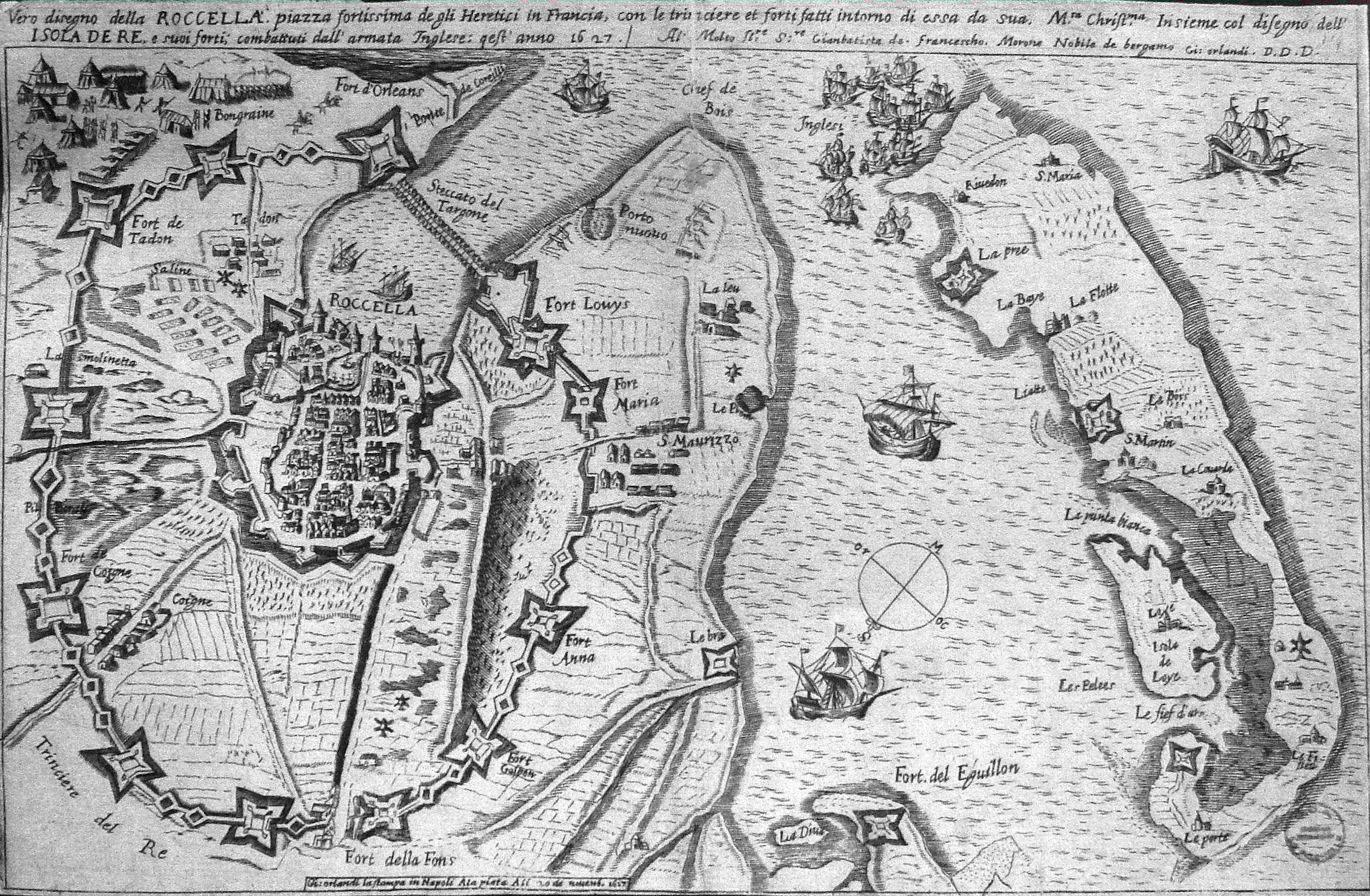
Siege of La Rochelle, with nearby Île de Ré, by G.Orlandi, 1627.


An important, perhaps to the participants even the key, feature of Early Modern were sieges. It is true in all times and all places that soldiers spend very little of there actual time engaged in battle, especially big, clash of armies battles. Hence the aphorism that war is -

Months of boredom punctuated by moments of extreme terror.

A lot of a soldier's time is spent waiting and trying to stave off the boredom of having to wait. And in early modern warfare some significant time periods were spent waiting on one side or the other of a siege line. Sieges could last for years: 


  • Ostend (1601–04)
  • Breda (1624 – 1625)
  • La Rochelle (1627–1628)
  • Mantua (1629–30)
  • Casale Monferrato (1629–31)
  • Candia (Crete) (1648–69) Yeah that’s right that's  twice as long as the legendary 10 year siege of Troy.
  • Waterford (1649-1650)
  • Copenhagen (1658–1659)
  • Fort Zeelandia (1661–1662)      
  • Ceuta (1694–1727) - 33 years! Claimed as the longest siege in history.
 

Our post Blitzkrieg, post Shock & Awe modern military viewpoint has a lot of difficulty comprehending the importance and focus that siege warfare and fortification design held on 17th century military and political thinkers and decision makers. Indeed we have a lot of trouble understanding the thought processes of the General Staff on either side in the First World War or the French over reliance on the Maginot line that followed it.


Capturing strong points was important to the way political and military leaders conceptualized war and its aims. And for the noble classes who provided most of the officers in the armies of the period, war was a way to gain glory and renown. And with the exception of a one army smashing into another sort of big battle - which only happened rarely in that or most periods, a successful conducted siege - whether as the besieger or the defender was likely to result in glory and promotions for some of the officers. And for the besiegers there might even be the bonus of a chance to loot the town.

The original inspiration for my post was an article I read about a year ago on the English Civil War blog Siege types of the English Civil War by David Flintham, a military historian specialising in 17th century sieges and fortifications. Flintham says,

"The origins of the great transformations of the 18th and 19th centuries (the Enlightenment, and the Agricultural and Industrial Revolutions) are firmly in the 17th century. The transformation on the battlefield was no less dramatic – military engineering which was regarded as an ‘art’ during the 16th century was very much a science by the end of the 17th ..." 

Siege warfare with on one side the immense precisely designed star-shaped fortifications on the one  side and the geometric traceries of multiple circumvallations connected by parallel communication trenches on the other is the aspect of warfare most amenable to the new fascination with reason and science. And the acknowledged master of the period was Vauban.


Later Flintham divides sieges into four types.
"Civil War sieges fall into four types:

  • The coup de main, where surprise was used (such as Alexander Leslie’s capture of Edinburgh Castle in 1639).
  • The ‘smash and grab', where an assault was launched after a preliminary bombardment, a preferred tactic of the New Model Army (and on at least one occasion, at Dartmouth Castle in 1646, the assault was launched without any bombardment). Here, just the threat of the assault was often enough to persuade the garrison to surrender.
  • The blockade, which was a longer-lasting affair, and the besieger invested the place of strength, preventing communication and offensive activities by the garrison. This was the preferred option by an attacker unwilling (or unable) to attempt an assault and was used (without much success) by the Royalists at Gloucester, Plymouth and Lyme Regis.
  • Finally, and quite uncommon was the complete investiture, where a circumvallation of rampart and ditch, fort and battery would be constructed around the entire town, in so doing cutting it off from the outside world. Examples of this are few: Newark (1645-6), Oxford (1646) and Colchester (1648)."

  Cardinal Richelieu at the Siege of La Rochelle, Henri Motte, 1881.

These same categories are prevalent in nearly all military periods. Any of these types could be rich fodder for an RPG. Note that here I am not contemplating an RPG where the players are running the characters who are commanding the opposing armies or major units. That situation is closer to the typical wargaming session than it is to the typical RPG session. And if all the players are up for that the appeal should be obvious. Instead lets look at the more common situation where the PCs do not control major military units. So how does the GM use these situations? Let's look at them one by one.
  • The traditional OD&D dungeon crawl is an example of a coup de main. And it points the way towards how to use the PCs. Obviously they, with their mad skillz and willingness to take insane risks at the drop of a gold piece are invaluable for a surprise assault.
  • The 'smash and grab' also sounds like a traditional dungeon crawl, but arguably the preliminary bombardment may differentiate the two. Though clearly these two categories overlap as Flintham acknowledges when he mentions that the assault on Dartmouth Castle was launched without any bombardment. And presumably the assault on Dartmouth came as a surprise to defenders who, once the saw the besieging army march on up to their walls, were probably expecting the traditional bombardment prior to an assault. The PCs are perfect for the quintessentially forlorn hope that leads the assault. And if your game is one that features powerful magic users (like many versions of D&D) why your PCs are also the artillery for the initial bombardment of the 'smash and grab.' And don't forget the defenders. Most fortifications have a few key areas and a few key vulnerabilities. Put the PCs there defending the important redoubt or holding the gateway once the ram has battered it down.
  • The blockade is probably the least used type for RPGs, with the possible exception of  naval and sci-fi based RPGs. The blockade and on its other side the blockade runner (you know that ship that we see at the beginning of A New Hope and the end of Rogue One). In part I suspect that is because blockade duty, like a complete investiture, is boring most of the time, but it lacks the fun of siege engines and the pageantry of one army staring at the other across their fortress walls and encircling  circumvallations. As mentioned, crashing the blockade is probably the easiest and most natural use for PCs. For naval blockades it does require that the PCs have a ship and for land blockades they should be mounted rather than infantry. 
  • The complete investiture has some of the same aspects as the blockade. We may see the defenders sending for help like we see, unsuccessfully, in Last of the Mohicans. PCs are perfect for this role. Otherwise I think that the investiture is best used as a backdrop. It may be the starting point for an assault or escalade (ascent by rope or ladders) which defaults to either the coup de main for, say a night escalade, or to the 'smash and grab' for an attack on a breach in the wall or a day time assault under covering fire. Another way to use the full investiture type of siege is assign the PCs to special forces or commando roles. They may be tasked to special missions to: sabotage an enemy battery, capture or kill an enemy leader, poison the water supply, blow up the ammo dump, set fires, drop the drawbridge and jam the portcullis, etc. I used several of the special missions during an arc where I set the PCs inside the town of Bergen-op-Zoom during the Spanish siege. Their roles included counter espionage, foiling attempts to blow up the towns powder magazine or to poison wells, stopping terror attacks aimed at destroying civilian will, holding important strong points against vigorous assault, and launching harassing raids to sabotage enemy guns or destroy the attackers morale.
  • Flintham left out one more way to take a fortress - treason. This too is good fodder for the PCs and it allows more scope for the more talkative and intellectual PCs and players beyond simply killing everything in their path. Figuring out how to find a weak defender who is susceptible to bribery or threats on the one hand or, for the defender, trying to catch the attacker's saboteurs and agents provocateur before they can strike on the other.



Monday, January 23, 2017

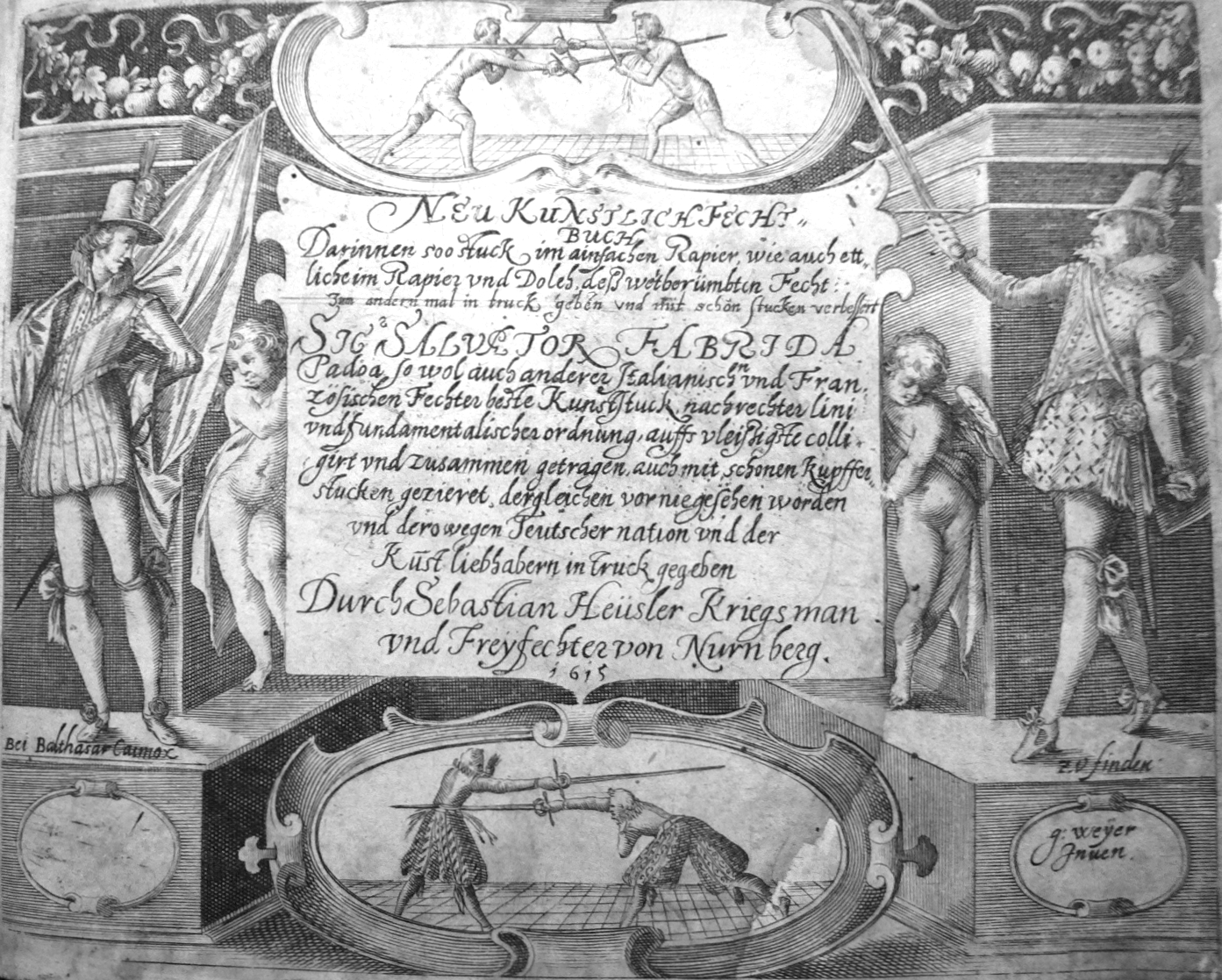
New Illustrated Fencing Manual: 1615

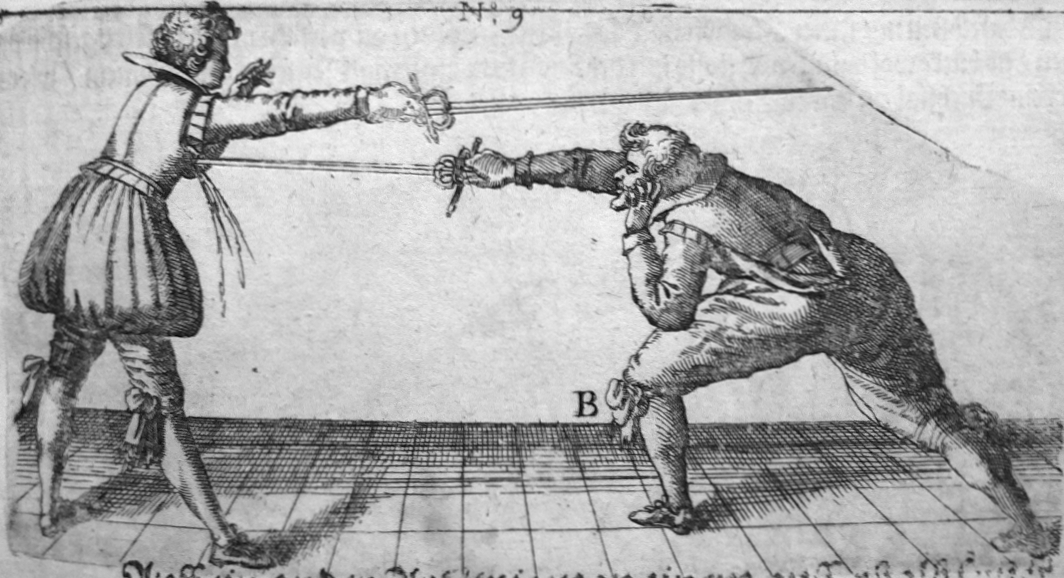
Illustration from Neu Kunstlich Fechtbuch a German Fencing Manual

Polish Fencing was the topic of the latest post on the Dariusz Cabelleros blog. The article included, as that blog usually does, some interesting period illustrations. I haven't been able to get the video to load, though I still hope to do so. But the post also included a link to the Wikipedia article on Neu Kunstlich Fechtbuch 


Neu Kunstlich Fechtbuch ("New Illustrated Fencing Manual") is a German fencing manual written by Sebastian Heußler and initially printed in 1615. The treatise presents a system of fencing based on the teachings of Salvator Fabris and Ridolfo Capo Ferro da Cagli, and covers the use of the rapier solo, the rapier and dagger, the rapier and cloak, and the dagger solo. It includes extensive explanatory text as well as numerous detailed illustrations by noted Nuremberg engraver Gabriel Weyer.


The first edition of Neu Kunstlich Fechtbuch was printed in Nuremberg, Germany in 1615 by Ludwig Lochner, the son of Heußler's former master. Incomplete versions were reprinted numerous times thereafter, including in 1616, 1617, 1626, 1627, 1630, 1640, and 1665; Lochner was also responsible for some or all of these printings.

I'm adding this book to my list of period fencing manuals.

Friday, January 20, 2017

Fiction Friday: Vol 7 - Tales of Vengeance | Book II: Mayhem, Ch 4 & 5


Chapter 4: The Raid


The prostitute Margot had told the heroes that Durgo’s gang had their lair in an old apartment house located close to The Temple. Presumably the location allowed the gang to quickly flee to the Temple for sanctuary to avoid arrest. The heroes planned to attack the gang’s hideout. Gaston led a force of Cardinal’s Guards including Norbert, Cobweb, and Jacques. While some of the Guards surrounded the building, the heroes led the assault. Norbert smashed down the front door and the others followed. They killed or captured most of the gang except for Durgo and his lieutenant, the pistol packing Bart Two-Gun.


Durgo ran up a narrow stair that led to a trap door to the apartment house’s attic. He was pursued by Cobweb, Gaston, and several of the others. When the Guards reached the attic they saw it was empty and unused except by the flock of pigeons that roosted there. Someone or something had startled the birds, but through the storm of wings Cobweb managed to notice a half-opened, dirt encrusted window that provided access to the apartment house’s steeply sloped roof. He and Gaston climbed out the window and began to traverse the roof, but the nimble Cobweb had years of practice climbing on roofs and in and out of windows from before he had entered the Cardinal’s Guard and he soon outdistanced Gaston. Ahead he could see Durgo slide down a drain pipe and run atop a garden wall that led to a neighboring courtyard. Durgo jumped down into the courtyard.


When Cobweb reached the courtyard the only thing in sight was an old well. He ran towards it and listened. Faintly he could hear the sound of footsteps fading away below. A closer look revealed a dry well shaft with hand rungs leading down to a narrow, low-ceilinged tunnel. Without a light source, Cobweb could not continue. Reluctantly he climbed back up the shaft where he found Gaston who ordered two of his Guards to check the gang’s hideout for lamps, candles, or torches that they could use to search the well tunnel.


Meanwhile a passerby told them that she had seen a man fitting Durgo’s description climb over the cemetery wall and run down the street towards Saint Martin’s. From that direction they heard cries of “Stop in the name of the law!” They set out in pursuit.


Gaston soon began to outdistance Cobweb. The Captain’s long legs ate up the distance and the ferocious expression on his face caused others to leap out of his way. Ahead, Durgo tried to run towards the Temple, but a patrol of Cardinal’s Guards cut him off and he had to turn northwest.


Instead of trying to outrun his Captain, Cobweb hitched a ride on a coach that was racing down the street at breakneck speed. He barely managed to keep hold and he heard his pistol clatter to the street. It’s loaded and wound. I hope the damn thing doesn’t go off and kill someone. He climbed on top of the coach and the height allowed him to see Durgo who was running about a block ahead of him. He seemed to be heading for the church of Saint Martins. Probably looking for sanctuary. And in one hand he clutched a large butcher knife that he used to frighten or slash his way past the other pedestrians. Cobweb commandeered the coach at swordpoint and ordered the driver. “In the name of the Cardinal, follow that man!”


The coach was already traveling at breakneck speed, but the driver applied his whip to the horses and made it go even faster. The coach caught up with Durgo at the next corner, which it took on just two wheels. Cobweb was afraid it would tip over so he leapt from the roof and flipped to the ground between Durgo and the sanctuary of St. Martins. He ordered Durgo to surrender, but Durgo attacked him. They fought. Durgo tried to draw his hatchet, but it was knocked aside in the battle. Still his frenzied offense drove Cobweb back long enough for the athletic Durgo to climb the side of a building and swing up onto the balcony. Cobweb tossed Durgo’s hatchet after him, but it harmlessly stuck in the balcony railing. Cobweb climbed after Durgo.


The climb continued up the facade of St. Martin’s Bell Tower. Cobweb followed the gang leader as he climbed through an open archway into the bell tower of the church. The two fought up and down the bell tower stairs, Cobweb’s rapier against Durgo’s knife and axe. The gang leader was bleeding in two places before the superior swordsmanship of the Cardinal’s Guard forced him to concede defeat. He surrendered and Cobweb made Durgo climb back down to the building where they were both soon spotted by Gaston and the other Cardinal’s Guards. Durgo climbed the rest of the way under the guns of the Guards. He and the rest of the prisoners were sent to the Little Chateau with an escort of Paris Archers and Red Guards led by Jacques and Norbert. One of the gang was unaccounted for. While most of the Guards had followed the gang leader, Durgo’s lieutenant, Bart Two-Gun had somehow escaped.


Chapter 5: The Tunnels


Cover of Discours des Sorceirs (1602) by Henry Boguet


Other events intervened before Gaston could return to explore the escape tunnel from the dry well. While researching the Loup Garou, Father Signoret had met a fellow scholar of the occult named Jean-Yves Barreau. Barreau had pointed Signoret towards a book called Discours des Sorceirs (English: Hateful Speech from Wizards) which was first published in Lyon in 1602 by the Magistrate, Henry Boguet. Boguet, who had died in 1619, was a well known jurist and judge in the County of Burgundy. His renown was to a large degree based on his fame as a demonologist and for his book, which had been reprinted twelve times in the years since it was first published. The Discours had a lengthy chapter on werewolves.


 The chapter included pictures (unexplained) of what the author called a “Piège à Loup” (English: Wolf Cage or Wolf Trap). The object depicted appeared to be a lantern of an unusual design, but a design that was familiar to the Jesuit for it was identical to an odd lantern that Signoret had seen in the museum-like Wunderkammer room in Amsterdam during a trip to Holland. And it also looked identical to the lantern shown hanging from the scaffold in an illustration entitled the Death of Le Courtaud that he had seen in Bernard Guenée’s Les Chroniques de Paris. Guenée’s book described the attacks by an enormous pack of wolves on the city of Paris itself during the middle of the 15th century. The pack’s leader was Le Courtaud.


Barreau was able to confirm two things about the mysterious lantern or lanterns. First that a Piège à Loup lantern was said to somehow act as a sort of trap to catch or hold a Loup Garou and second that the lantern from the scaffold was rumored to still be in Paris, kept in the basement vaults of the Cathedral of Notre Dame de Paris. Father Signoret thanked the Lord that his research had uncovered an object that would help in the struggle against the cursed Loup Garou. Unfortunately there was a complication.

During a previous mission for the Society of Jesus, Father Signoret had lost a holy relic, the Thigh Bone of St. Anthony, and had made an enemy of Friar Fitellus, an Inquisitor of the Roman Inquisition who had been seeking the same relic. The last time Fitellus had been in Paris he had filed several severe accusations against Father Signoret with the ecclesiastical authorities. Now Fitellus had reappeared in Paris along with a group of Inquisition familiars some of whom the Friar had assigned to constantly and openly follow the Jesuit.

Father Signoret was worried for his own safety, but in he was even more worried about being followed for other reasons. Through his research regarding legends of shape changers, he had discovered the existence of an artifact known as the Wolf Trap Lantern that could prove useful in combating werewolves. The artifact was located in the vaults beneath the Cathedral of Notre Dame de Paris and while Signoret did not have permission to take the Lantern, he nevertheless intended to borrow it without permission for the greater good and the glory of God. But he could not afford to be spotted doing that by his shadows. Therefore he asked Gaston to help safeguard his person while he tried to temporarily lose his pursuers. They were successful and the Jesuit managed to obtain the Lantern and to smuggle it out of the Cathedral vaults.

At last Gaston was able to return and resume his exploration. He was accompanied by Cobweb and several of the Cardinal’s Guards who had taken part in the hunt for the Wolf of Soissons and this time they were prepared with an ample supply of lanterns and torches. By the light of their lanterns they could see that the tunnel at the bottom of the dry well was low, narrow, and dirt-lined. To proceed they had to shuffle along hunched over and with heads bent.

The tunnel smelled of earth and mold with a whiff of putrescence like a long dead corpse. In places old tree roots reached out from the walls like bony fingers. Occasionally the support beams creaked and a trickle of dirt sifted slowly down from the ceiling. At first the tunnel was shored up by charred pieces of scrap wood scavenged from burned-out buildings, but as they continued to follow the tunnel this changed and they saw that now the walls were held up by macabre support beams fashioned from the decayed wood of old coffin lids. Beneath their feet was a litter of human and animal bones which they vainly tried not to tread upon.


Eventually their tunnel split into many side passages. Some seemed to run parallel to each other and many were barely tall enough to crawl through. All were home to hundreds of sleeping bats which their lights soon disturbed as the air was filled with the whirring of bat wings. Cobweb had heard rumors of clouds of bats that were occasionally glimpsed in the Paris sky at dusk. They found several dead ends where the branch was too low or narrow to traverse and once the tunnel ended in the broken open side of an empty coffin. One tunnel was so choked with tree roots that Gaston had to hack and force his way forward. This tunnel ended with a stone which, when levered out of the way, revealed the interior of the ancient crypt of some noble family. They entered, and through the crypt’s wrought iron gate, they saw the uneven rows of tombstones of one of Paris’s lesser cemeteries. They found a key hanging from a wall just inside the gate and used it to exit the crypt. Outside they found the cemetery gate and a sign which identified this as the Cemetery of Saint Nicolas. Through the cemetery gate they saw the apartment house hideout of Durgo’s gang. They wondered how many other passages would lead into an old mausoleum and or someone’s family crypt.

They returned to the crypt. Further investigation revealed a second concealed entrance that led to a long winding passage that led back underground. It had several branches most of which they did not take the time to explore. Ahead Cobweb saw a pair of glowing eyes in the dark. Thinking that this might be Durgo’s missing lieutenant, they gave chase, but either the eyes disappeared or the creature fled in the dark. They continued to follow the passage which eventually opened through a hole in the wall into a brick-lined cellar or subbasement. The saw a trap door on the ceiling, but it was either locked or blocked from above. In the wall near the trap door was a darkened hole with a mound of dirt and broken beneath. They crawled over the mound into the hole. They crawled along a winding passage that gradually increased in size until they could again stand and shuffle along with bent heads. The reached another fork and where they again held to the right hand path.

Here the tunnel’s ceiling was festooned with numerous small, narrow roots that seemed to dangle and sway with motion in the flickering light of their lanterns. But soon they realized that the motion was not an illusion and that what they saw were not small roots but large worms wriggling in the earth of the tunnel’s ceiling. As Cobweb shuddered in horror, he and Gaston heard a sound, a sort of low moan. They moved closer and found a small side tunnel or alcove from which the sound seemed to emanate. Inside they saw a human figure clad in rags. It recoiled from their light and moaned again, this time clearly in fear. They spoke calmly to the figure who they soon realized was a man, his clothing tattered and torn to mere rags encrusted with mud and filth.

They dimmed their lanterns, the light of which seemed to pain the poor fugitive and reassured perhaps by their voices or maybe just their presence he eventually looked towards them. His widely staring eyes contained fear and possibly madness. He babbled about “Them” and when they carefully asked who he was and how he came to be there they could get little sense from him. He kept frantically asking if “They are coming” and for the heroes to save him “from Them.” He told them that “They” had poked and prodded him in the dark and had made strange sounds that frightened him, “sometimes it sounded like a kind of gibbering but as I listened it seemed I could almost make out some kinds of words.” From what he told them, it seemed the fugitive had been running from some sort of pursuit and had gotten into the tunnels to hide, but he had become lost and then “they” had found him and from then on his stay was darkness and fear.

Cobweb and Gaston assured the man that they were not lost and that they would protect him from “Them.” Comforted by this, the madman became friendlier. Cobweb offered to lead him out of the tunnels and into the light of the world above. He thanked Cobweb and behind his back he pulled up a handful of earthworms which he offered to Cobweb to eat. Cobweb, who said he was not feeling especially hungry, declined. But the gesture of offering seemed oddly familiar and the former thief and present guardsman who realized that the crazed fugitive was someone he knew from the old days, a pickpocket and beggar named Romain Light Fingers who had been one of the teachers of his misspent youth.

The heroes decided that by now, if Bart Two-Gun ever was here he had long since fled so they returned to the surface world and brought Romain back into the light of day. Once they were out of the cemetery, Cobweb took Romain to a tavern and bought him a meal and a drink, questioned him, then let him go.


EDIT: I found some old notes and used them to revise this.