Wednesday, September 21, 2016

Jacques Callot

Inspired by If Romantic-Era Artists Ran D&D Campaigns (AKA 'a thin excuse for an image dump')
.

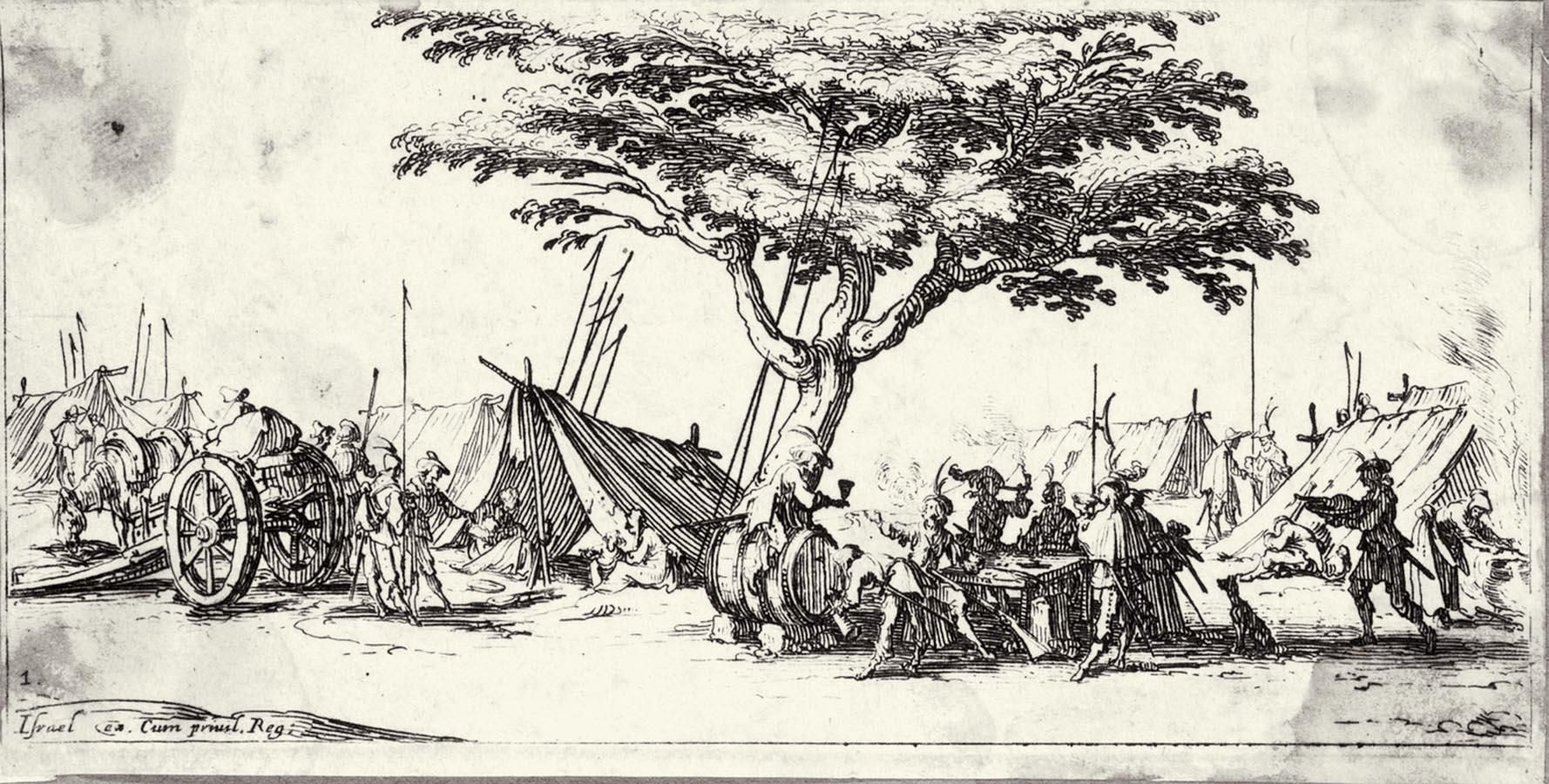
Jacques Callot runs a wilderness oriented crapsack world. Wilderness encounters are so frequent and so deadly that the PCs keep their muskets by their side even during dinner.


The players never know how their PCs will be killed, they just know that (a) they will be killed and (b) their death will be both unpleasant and public.


Friday, September 16, 2016

Fiction Friday: Vol 6: City Tales | Book II: Sacrilege Ch 1 + Ch 2

This adventure takes place in September of 1623 shortly after Father Signoret, who left the legation while they were trapped by the Spanish siege inside the town of Bergen-op-Zoom, has returned to Paris alone.

Father Gaétan Signoret is a Jesuit priest and a bit of a Renaissance man. He is the first cousin of Guy de Bourges on the mother's side and despite being a priest he is a skilled and well-known duelist.


September 1623


Volume 6: City Tales, Book II: Sacrilege


Chapter 1: Nobody Expects the Inquisition

(SEP 1623) Father Signoret discovers he has a rival within the Jesuits – Father Vargas Inteccion. The two are sent to recover a Holy Relic, the Thigh Bone of St. Cyril from a church some distance from Paris and to return it Paris so that it can be examined by a Jesuit investigator sent from the Father General of the Jesuits in Rome. The investigator was injured on his way to Paris and rather than going to see the relic, they are to bring the relic to him. But unknown to the Jesuits, there is a rival group of searchers who are also from Rome. 


The rival searchers are led by Friar Fitellus di Canem who is a fanatic Dominican, a member of a secret Dominican Order, and an Inquisitor with broad ranging powers including documents and an authorization from the Pope in Rome that give the Inquisitor Plenipotentiary powers. Friar Fitellus is accompanied by an elite bodyguard of the Roman Inquisition and a squad of Papal Swiss Guards from Avignon led by an Ensign. 


Signoret, Vargas, and Claude encounter the rival searchers while stopped at a roadside inn for a meal and a drink and to rest their mounts. While they are eating, a large group of travelers arrive on horseback. One group enters the inn and questions the Jesuits. A second group checks the stables and tends to the group’s mounts. The Jesuits retire to their room upstairs leaving the common room to the Inquisitor. Then they escape out the window and hide in the woods. Although they have lost their mounts and baggage, they are free of the Inquisitors. 


Father Signoret’s skills as a hunter allow the three to travel off the roads to the town with the relic. As they travel, Father Vargas informs Signoret that although the Inquisitor claims to have been given Plenipotentiary powers by the Pope in Rome, his authority as an Inquisitor is not recognized in France. In fact, since it is unlikely that he has actually been to Paris to present his credentials to the King, his Plenipotentiary powers are also not valid within France. “It is likely,” Vargas says, “that the Gallicans on the King’s Council will advise the His Majesty not to recognize the Inquisitor’s credentials. In addition, the Plenipotentiary, even if he is a representative of the Pope, is not the Pope himself and since our Order owes allegiance directly to the Pope we fall under the authority of the head of our Order, the Commander General in Rome, not a Papal Plenipotentiary.


Near the town, around a bend in the road, they find a wrecked coach.  A large tree branch blocks the path. Anyone with the Huntsman career can tell that the driver most have lost control when the coach went over the branch. Scattered in and around the wreck are the bodies of the driver, coachman, and a well-dressed gentleman or minor noble. They are covered in blood and have clearly been murdered. Amidst the wreckage, hidden beneath a cloak and several pillows is an injured young girl. Who tells them that her mother has been kidnapped by Outlaws. She saw their leader who she calls, “the Beast.”


Chapter 2: Cat and Mouse


The PCs arrive in the town and leave the girl with a healer, Mother Hubbard. As they head towards the main church, Outlaws attack the town. Some Outlaws attack the townspeople while other break into the church to steal the gold and silver altar pieces. 

Father Signoret heads directly for the Church as Farther Vargas accompanies him. Signoret leaves Claude behind to help a townswoman, Mother Hubbard, to safety. Signoret protects the altar pieces from the Outlaws and the arrival of the Inquisition troops frightens the remaining Outlaws, who are unsure how many soldiers they are facing, into fleeing. The Outlaws retreat to the safety of the surrounding forest. Meanwhile the Jesuits explain to Father Menard that they are here for the relic, then Signoret, Vargas, and the church’s pastor, Father Menard, push aside the stone top of the altar and uncover the Thigh Bone of St. Cyril. To avoid the Inquisition, the Jesuits flee out the back door of the church with the Thigh Bone of St. Cyril.

The combined efforts of the Jesuits and the Inquisitor and his party have foiled the Outlaws for now. But that night, while Signoret, Vargas, and Claude hide in the woods, Cat’s Claw Fornier strikes. Signoret hears a call for help and then a blood curdling series of screams from the church. Just inside the doors to the church is the body of Father Menard nearly torn apart as if by the claws of a lion. Although horribly wounded he still has time to gasp out, “He is still here. Do not let him get it…”

The Jesuits again take refuge outside of town to avoid the men of the Inquisitor. Meanwhile, having found from the dying Father Menard that the relic is missing, Cat’s Claw Fornier and his men track the Jesuits. At a lonely river crossing, Fornier springs from ambush. Evading Father Signoret’s attack, he threatens to kill Father Vargas Ior is it Claude) unless they give him the Holy relic. Rather than see his fellow Jesuit killed (or poor Claude), Signoret (or the Jesuits) gives Fornier the Thigh Bone of St. Cyril. Father Signoret’s tries to track Fornier, but the villain’s woodland skills are even better than those of the Jesuit. However, Signoret’s skills are sufficient to allow the two Jesuits and Claude to avoid any pursuit and to make their way safely cross-country and  back to Paris. 

One they reach Paris, they learn that Friar Fitella, the Inquisitor, is there ahead of them and he thinks that the Jesuits are responsible for the theft of the Relic. He lodges a formal complaint with the ecclesiastical court in Paris and insinuates that “the timing of Father Menard’s murder is most suspicious.”


Wednesday, September 14, 2016

A Troupe of Players: Binet’s Theater Troupe

Yesterday's post was about a Paris Theater. Today's will focus on a small troupe of players of the sort who might have, or would aspire to have, a chance to play in the Hôtel de Bourgogne.

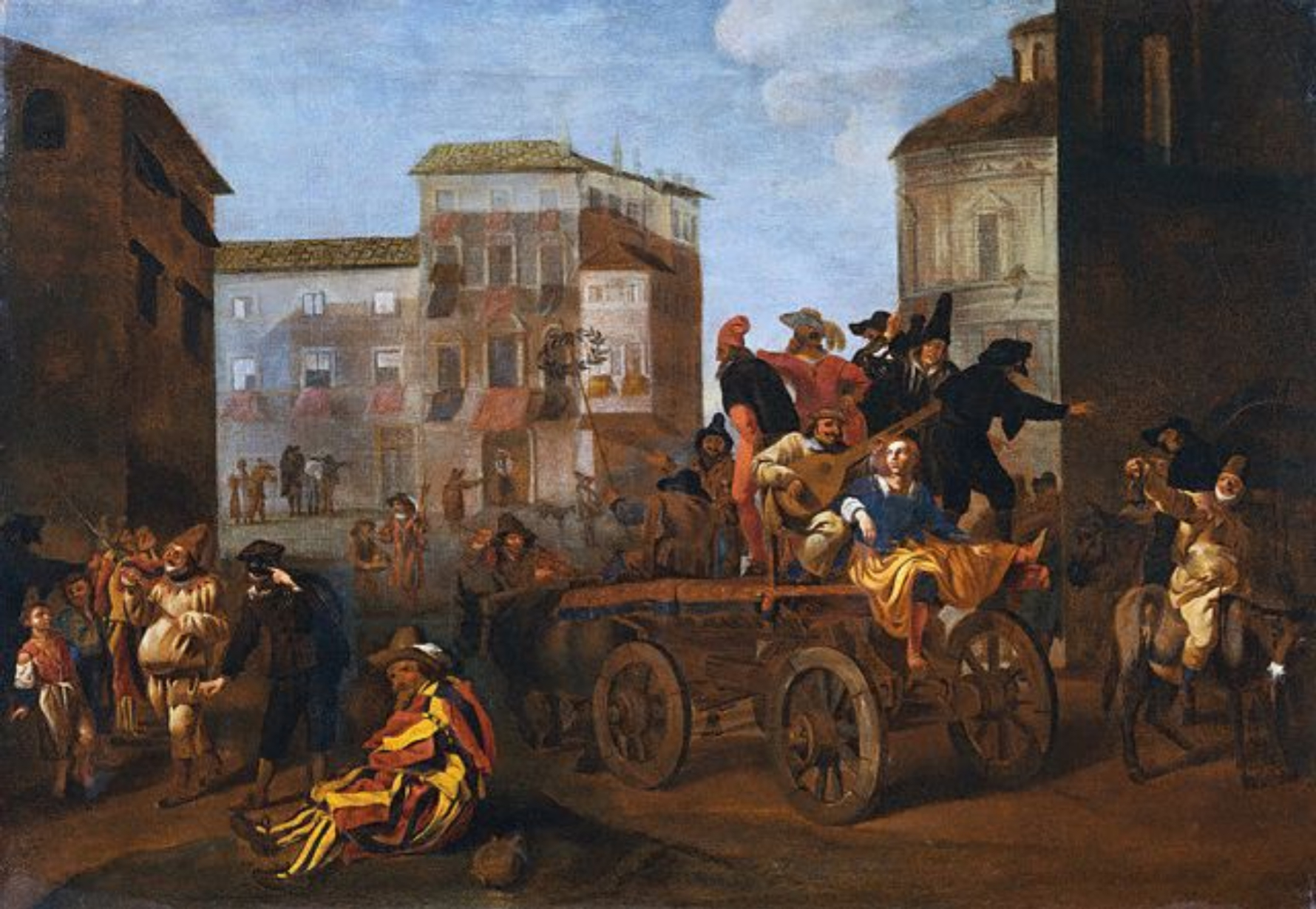
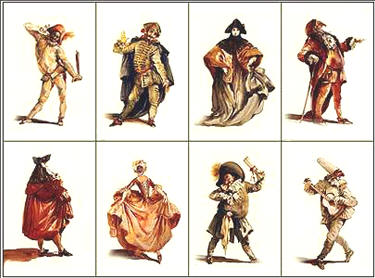
Characters from the Commedia dell'arte


The player of Norbert (we'll designate her Player C) who is one of the PCs in my H+I campaign decided that Norbert wanted to try a career on stage. He was already a performer of sorts:  strongman, juggler, and he had a performing rat named Hercules. So I created a small theater troop with financial problems, the other players picked some of the members of the troop to run and we focused a couple of sessions on Norbert. And the theatre troop and their play became involved in the feud between the Baron Villemorin and Norbert's cousin Gaston, who is also a playwright. The players seem to enjoy the occasional opportunity to play a minor character. I suppose it gives them a break from their main characters. I  think it is also helpful as it gives the players a first hand understanding of the limitations of the rank and file sorts of people who make up most of the setting and who are neither heroes nor villains. 

Here is theater troupe of the Impresario Binet. 

Impressario – Producer and Director
(Elite Pawn) run by GM
Age: 50+
Bombastic personality: “I am Francois Binet…You may call me – Impresario!”
Daring -1       Savvy 1         Flair 2
Director 1      Producer 1     Lifeblood 4
Languages: French (N), Italian
Thrown object: 1d2 Dmg;
Maneuver: Persuade+2, Trick+1; Footwork+1; Ranged Attack+1

Salvatore Machiavelli – Playwright (Retainer 1)  run by Player B
Salvatore calls Norbert “a clumsy cyclops”
Might -1         Savvy 2         Ranged 1      Playwright 1*
Lifeblood 7    Composure 3 Advantage 1
Languages: Italian (N), French (F)
Boon: *Artistic (Bonus Die)
Flaw: Arrogant (Only Italians can truly understand the theater)
Knife: 1d3 Damage; +1 Called Shot; Thrown: Range 5’
Maneuver: Bladework+0; Footwork+2; Parry+2; Ranged Attack+3


Acton the Magnificent – Male Lead Actor (Green Pawn) run by Player B
Savvy -1        Flair 2            Actor 0        Lifeblood 1
Languages: French (N), Italian
Flaw: Braggert
Rapier: 1d6 Damage; +1 Parry
Maneuver: Persuade+2; Quick Cut+2; Cloak Parry+2


Gerta – Dutch Seamstress (Average Pawn) Age: 25, homely run by Player A
Might 1          Savvy 1         Seamstress 1    Cook 0       Lifeblood 3
Languages: Dutch (N), French
Scissors: 1d3+1 Dmg
Pot or pan: 1d6 Dmg
Butcher knife: 1d3+2 Dmg; Range: 5’; Called Shot +1
Maneuver: Bladework+0; Footwork+1, Grapple+1, Shove/Trip+1


Amelie – Ingénue (Average Pawn) Age: 16, small run by Player A
Might -1         Savvy 1         Flair 2          Actress 0         Lifeblood 1
Languages: French (N), Italian
Flaw: Hopeless Romantic
Thrown object: 1 Dmg;
Maneuver: Persuade+2, Trick+1; Footwork+1; Ranged Attack+1


Columbine – Female Lead
(Veteran Pawn) run by GM
Age: 29                                  NPC
Might -1         Savvy 1         Flair 2
Actress 1       Lifeblood 1
Languages: French (N), Italian
Thrown object: 1 Dmg;
Maneuver: Persuade+2, Trick+1; Footwork+1; Ranged Attack+1


Extras (Green Pawn)             NPCs run by GM
Daring -1       Flair 1            Defense 1
Actor 0          Lifeblood 1
Languages: French (N)
Thrown object: 1d2 Dmg;
Maneuver: Footwork+0; Ranged Attack+0


Rene Charpentier – Carpenter
(Average Pawn)  run by GM
Age: 45        NPC
Short, sinewy man with graying hair
Might 1          Daring -1       Melee 1
Carpenter 1    Lifeblood 3
Languages: French (N)
Hammer: 1d6 Dmg;
Maneuver: Hammer (+0)


Stagehands – (Green Pawn)  NPC run by GM
Brawl 1          Stagehand 0      Lifeblood 1
Languages: French (N)
Fist:  1d2 Dmg;
Hammer: 1d6 Dmg;
Maneuver: Brawling+1, Bludgeon+0


Tuesday, September 13, 2016

Paris Theater: Hôtel de Bourgogne


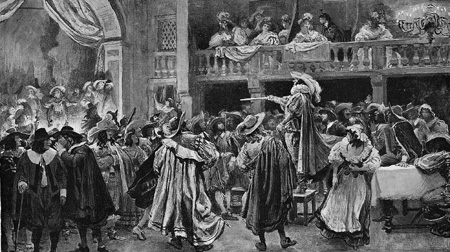
Scene from Cyrano
Theater and swashbuckling go together. Who can forget Cyrano's duel set to rhyme or Scaramouche's duel that begins with him on stage in mask and costume?


After the Duel
In my H+I campaign I intentionally include a few anachronisms. One such is the map of a well known theater. The Hôtel de Bourgogne dates from 1548, but I haven't found a good map of the original layout. The one I have found, which is pretty nice, dates from 1647, the time of Moliere. But what's 20 years give-or-take? The nice part about using this location is the existence of maps, drawings, and engravings showing the theater in action.


Check this out. It has 4 chandeliers!

The theater plan is from this nice little article in French.


The religious fraternity called the Confrérie de la Passion (or Confraternity of the Passion) built the Bourgogne theatre in the year 1548 in order to have a place in which to produce religious drama. Unfortunately for them, in the same year, the French king banned the production of religious plays in Paris. In exchange for the inconvenience of being unable to use their theatre for the purpose for which it was designed, the king granted them a monopoly on the production of French language drama within the city.


By the end of the sixteenth century, the group had stopped producing their own work in favor of renting out their theatre to travelling companies. All troupes playing in Paris during this time were required to either rent the Bourgogne theatre from the Confraternity, or else pay them for the right to produce elsewhere.


The Comédiens du Roi of Valleran Le Conte and Adrien Talmy arrived in 1599. Because of frequent money problems, Valleran's group could only appear intermittently at the Hôtel de Bourgogne and often toured the provinces. They were particularly associated with the works of Alexandre Hardy. The actor Bellerose joined Valleran's troupe in 1610, but subsequently (1619, 1620) also appeared with other groups in the provinces. The actor Gros-Guillaume joined Valleran in 1610, and became his co-director in 1612. Subsequently Gros-Guillaume became the sole director. From 1615 he worked closely with the actors Gautier-Garguille and Turlupin (also called Belleville). The trio were the preeminent farceurs on the Paris stage until about 1633. From about 1622 Bellerose returned and became an important member of the troupe, succeeding Gros-Guillaume as director upon the latter's death in 1634. Bellerose continued in that position until 1647.


From about 1622 to 1629 the theatre was shared with a rival troupe patronized by the Prince of Orange. Among its members was the tragedian Montdory. Montdory had previously appeared with Valleran's company in 1612 and would later join with Charles Lenoir in 1634 to found the Théâtre du Marais. The appearances of the Prince of Orange's troupe at the Bourgogne produced conflicts with the Comédiens du Roi, and the latter sometimes resorted to playing outside the theatre, blocking the public from entering to see their competitors. 


These theater conflicts and rivalries would provide some unusual hooks for adventure. The PCs could be hired by one troop or the other or might just be fanatical fans of one of the troops. Either way they could assist a troupe trying to block competitors or clear rivals from the path of their own troupe. Well known actors and accomplished playwrights could be the focus of PCs as either bodyguards or kidnappers.

The Hôtel de Bourgogne was located a few blocks north of the Les Halles market and west of the Church of St. Eustache.

Tomorrow's post will provide a small troupe of players called Binet's Theater Troupe to use in an H+I campaign.